
Ganning doon the Scotswood Road: Geordie war crimes
TetleysTLDR: The summary
Talk of the Israeli war machine in Britain will usually fixate on Elbit Systems: the drones, the intelligence systems, the surveillance tech, but there’s another, quieter node in this network that should trouble every thinking person: Pearson Engineering, a defence firm based in Newcastle upon Tyne that is now part of Rafael Advanced Defense Systems, itself state-owned by Israel. This is not a tangle of abstract ties. It is a direct, material link from British soil to the machinery being used today to devastate Gaza and it exists with the active complicity of Britain’s governing party, the Labour Party and its foreign secretary, David Lammy.
TetleysTLDR: The article
If you head west from Newcastle upon Tyne along the Scotswood Road, you can't miss the historical ties to the arms-manufacturing history of the British Empire. This stretch of the Tyne was once dominated by Sir William Armstrong’s works, the birthplace of Armstrong Whitworth, later folded into Vickers, whose guns, ships and armoured vehicles armed imperial conquest across the globe. From naval artillery to field guns, from warships to munitions this was an industrial landscape built not on civic pride but on the organised violence that sustained empire. Weapons forged here were used to crush colonial resistance, police subject peoples and enforce Britain’s global reach from Ireland to India. The factories of Scotswood were never neutral sites of industry; they were engines of domination, deeply entwined with state power and imperial ambition. War here was a business model.
And Scotswood made Armstrong rich beyond his wildest dreams: the riverside works on Tyneside churned out hydraulic machinery, armaments and heavy engineering at a scale that turned William Armstrong from a clever Northumbrian engineer into one of the wealthiest industrialists in Britain. That fortune flowed straight back uphill to Cragside, his extraordinary country house in Rothbury, where money, science and vanity fused into something genuinely revolutionary. Powered by water turbines on the estate, Cragside became the first house in the world to be lit by hydroelectricity, glowing with electric light years before most cities had even gas in every street. It was both a monument to Victorian ingenuity and a symbol of how industrial capitalism could quite literally rewire the world for those who profited most from it.

Cragside House. Armstrong's pad now owned by theNational Trust. Death is a profitable business
Of course the Geordies who worked in his factories on the road name-checked in The Blaydon Races were, by contrast, far from rich: men, women and even children trudged daily along Scotswood Road to Armstrong’s works, earning wages that barely kept a roof over their heads while the furnaces roared and the Tyne choked with smoke. Their labour underpinned the vast wealth that built Cragside and lit its rooms with electric light, yet for them there was no glow of modernity: just long hours, dangerous machinery and lives ground down by industrial discipline, a world away from the polished brass and clever turbines of the great man’s hilltop retreat.
That history matters because it was never reckoned with, only rebranded. The decline of formal empire did not dismantle Britain’s arms economy, it simply dispersed it, sanitised it and folded it into the language of 'defence', 'security' and 'strategic partnership'. Labour, for all its talk of renewal, has never broken from this inheritance. From Attlee’s nuclear gamble to today’s export licensing regime, the party has repeatedly chosen industrial continuity over moral rupture. The old imperial foundries may have closed or changed hands but the assumption that Britain’s prosperity and geopolitical relevance rest on weapons manufacturing remains intact. I n an era of global instability, Labour does not challenge that logic, it actively manages it. The result is a politics that treats arms production as inevitable, foreign military alliances as untouchable and Britain’s long history of profiting from organised violence as an awkward footnote rather than a live political question demanding an answer.

The slums of Newcastle that housed Armstrong's factory workers
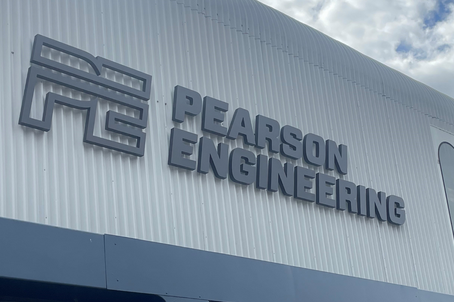
In this sits Pearson Engineering. Pearson was was once a recognisably British defence firm, mobility systems for armoured vehicles, mine-clearing gear, battlefield engineering equipment. Nothing glamorous. But it mattered: where others focused on the optics of war, Pearson built the means to push armour into cities and across borders. This begs a question:
WHAT IN HOLY FUCK IS AN ISRAELI ARMS COMPANY DOING PERCHED NEXT TO THE RIVER TYNE
In 2022 Rafael, Israel’s state-owned defence giant and the developer of weapons like Spike missiles and components of the Iron Dome system acquired Pearson outright. This means that an Israeli government-linked entity now owns a British engineering firm whose expertise enhances battlefield mobility globally. That’s not 'arm’s length'. That’s strategic integration. The Guardian
Even as protesters rallied outside Pearson’s Newcastle works, British police were deployed at enormous cost to protect the factory, at least £209,755 in overtime policing between late 2023 and early 2025 alone: even after sanctions had been applied to prominent figures in the Israeli government. Declassified UK
This matters because Pearson’s equipment isn’t abstract: it’s used to clear paths for tanks, to breach defended zones, to enable ground offensives. When Israeli forces conduct operations that violate international humanitarian law: smashing homes, reducing neighbourhoods to rubble: the 'quiet' part of the war machine is doing its own work and the UK government knows all this full well. Promo video
Israeli war crimes and UK complicity
There is an overwhelming body of evidence that Israeli military operations in Gaza have amounted to serious war crimes and violations of international humanitarian law. Massive civilian casualties, repeated attacks on non-combatants, the bombardment of hospitals and the effective starvation of large populations have been documented by human rights organisations around the world. Legal experts and international bodies have warned that if the UK continues to supply arms to Israel, it risks being criminally liable for its actions in those violations, even genocide, under international law. Wikipedia
That continuity is not abstract. It is geographical, institutional and political. The arms economy never really left the west end of Newcastle; it simply changed corporate forms. Where Armstrong and Vickers once forged guns and warships for empire, today’s defence firms occupy the same industrial terrain under new ownership structures, new branding, and new geopolitical alignments. What has endured is the assumption that weapons manufacturing is a public good, that it should be insulated from democratic challenge and that its downstream consequences: who is killed, displaced or brutalised are someone else’s problem. This is how industrial violence is normalised: not through open celebration but through bureaucratic routine and political silence.

It is in this context that Pearson Engineering’s presence on the old Armstrong Works site takes on its full significance. Pearson is not an anomaly or a deviation from Newcastle’s industrial past; it is its modern expression. The company specialises in battlefield engineering: the unglamorous but essential mechanics of ground warfare: breaching, clearing, armoured mobility. These are not defensive abstractions but practical tools that make invasions possible. That Pearson now sits within the ownership structure of Rafael Advanced Defense Systems, an Israeli state-owned arms manufacturer at the heart of the IDF’s operations, is not a coincidence but a logical outcome of Britain’s refusal to dismantle its imperial-industrial inheritance.
Today, UK policy still allows parts, components and technology to flow into Israel’s military supply chains. It does so while claiming that suspending such trade would somehow jeopardise NATO cohesion or European security: in other words, that war crimes are a price worth paying for geopolitical stability. This is an argument not of principle but of convenience and it fucking stinks.

On 10 June 2025, the UK government, alongside Canada, Australia, New Zealand and Norway, sanctioned Israeli Finance Minister Bezalel Smotrich (as well as Itamar Ben-Gvir) under its Global Human Rights Sanctions Regulations for what it described as repeated incitement of violence against Palestinian communities in the occupied West Bank. As a result, Smotrich is banned from entering the UK and any assets he may hold in British jurisdiction are frozen; the measures also bar him from directing, managing or promoting business activities in the UK. These sanctions are a targeted diplomatic step rather than a criminal conviction, they do not strip citizenship or impose criminal penalties but are intended to signpost UK disapproval of actions seen to undermine human rights and the viability of a two-state solution. The move has diplomatic implications, contributing to tensions in UK–Israel relations and signalling a willingness by the UK to take concrete measures against individuals in foreign governments whose conduct it judges to violate international human rights norms.
As Minister of Finance, Smotrich is the political head of the Israeli Ministry of Finance the entity that (through state ownership structures) has significant control over Pearson Engineering’s parent company. Declassified UK
This has been noted in reporting and public discussion (eg activists highlighting that the finance minister oversees the ministry that controls Rafael, and thus Pearson Engineering). Declassified UK
Therefore this is a blatant breach of the sanction that our Government is not acting on.
Labour’s foreign policy quandary
Under Keir Starmer’s premiership, the government has put some limits on arms exports to Israel, just enough to look like it's taking a stand. In a narrow and partial way. It has also publicly called for humanitarian pauses and ceasefires. Wikipedia
Defenders of Pearson Engineering and of UK defence ties to Israel more broadly, lean heavily on a single claim: Pearson does not directly supply the IDF. This is technically phrased, legally cautious, and entirely bullshit.
1. Corporate ownership: Pearson Engineering and Rafael Advanced Defense Systems
Pearson is a wholly owned subsidiary of a company whose primary client is the IDF. Its intellectual property, research capacity and production expertise sit within Rafael’s corporate structure. The idea that this knowledge somehow stops at a notional firewall is fantasy. This is the same argument used by:
- Arms firms that claim they only supply 'components'
- Tech companies that provide 'dual-use' systems
- Governments that license exports while insisting on moral distance
It is a bureaucratic shell game designed to maintain plausible deniability, not ethical separation. If this logic were applied consistently, no arms company anywhere would ever be responsible for how its technology is used.
Pearson Engineering operates with full UK government approval. Its acquisition by Rafael passed regulatory scrutiny. Its exports are licensed. Its facilities are protected by British policing when protested. This did not change when Labour returned to government. Despite rhetorical shifts, the fundamentals remain:
- Arms trade with Israel continues
- Export licences remain largely intact
- 'Security cooperation' is preserved as a strategic priority
2. Directors with Links to Israeli Defence Leadership
Yoram Aldo Aron
- An active director of Pearson Engineering.
- Nationality: Israeli and British. Company House
Aron’s appointment shortly after the Rafael acquisition reflects direct operational links between the UK company’s governance and Israeli personnel, increasing strategic alignment with Rafael’s broader activities

Tzvi Marmor
- Another director at Pearson Engineering.
- Nationality: Israeli. Company House
While public records do not list specific previous military roles, his nationality and appointment following the Rafael takeover indicate continuity of Israeli defence sector influence at the board level.

Liat Shechter Nakash
- Secretary of Pearson Engineering

(Former) Ran Gozali
- Previously a director of Pearson Engineering.
- Listed in reporting as an Executive Vice President of Rafael — the Israeli parent company. Declassified
These appointments show direct managerial and executive overlap between the Israeli defence company Rafael and Pearson Engineering’s board.

3. UK Defence Establishment Connections
Lord John Hutton
- A British ex-politician and former defence and trade secretary, he has served as a director of Pearson Engineering since the 2022 acquisition by Rafael. Company House
While Hutton is clearly not Israeli military, his presence strengthens ties between UK defence leadership and an Israeli government-owned defence contractor. In the context of UK–Israel defence engagement, his role is politically significant and has been criticised by campaign groups because of the broader Israeli military applications of Rafael systems. Declassified UK

4. How these individual and corporate links relate to the Israeli military
Rafael Advanced Defense Systems is a core supplier of weapons and defence systems to the Israel Defence Forces. Many of Rafael’s products, including missile systems and advanced armoured vehicle technology, are used in IDF operations. Rafael’s systems like Trophy, Iron Dome, David’s Sling and others have operational deployment with Israeli military forces. CAAT
Because Rafael now owns Pearson Engineering, the directors of Pearson effectively operate under the governance of a company whose main military customer is the Israeli state and its armed forces. Even if Pearson itself may state that the IDF does not currently use its specific UK-made equipment, the parent company is deeply integrated into Israel’s defence supply chain and operational use. Pearson Engineering

The presence of an Israeli state-owned arms subsidiary by the Tyne is not an embarrassment to be quietly managed. It is a feature of British foreign policy, not a bug. This is how complicity works in practice. Not through dramatic announcements, but through continuity, silence, and procedural normality.
Imagine, if you will for one moment, a Russian state-owned arms manufacturer acquired a factory in the North East, staffed it with British engineers, integrated it into its weapons supply chain, and used that expertise to prosecute a war of destruction, for example, in Ukraine. The response would be immediate. There would be emergency debates. Sanctions. Forced divestment. Media outrage. That none of this applies to Israel tells you everything you need to know about the hierarchy of acceptable violence in British political life. Israel is not treated like a normal state. It is treated as an exception: exempt from scrutiny, shielded by historical guilt, geopolitical alignment and an entrenched political consensus that collapses the moment Palestinian lives are mentioned. Pearson Engineering exists within that exception.

Sadly and annoyingly, the fundamental framework remains one of alignment with Israel’s security priorities. The government still supports Israel’s 'right to self-defence', what the fuck that is now, and crucially, it has refused to impose a full arms embargo or halt all military collaboration : even in the face of mounting evidence of atrocities. Wikipedia
David Lammy, the Foreign Secretary who personally opposed a full embargo and identifies as a 'liberal, progressive Zionist' , even while attempting to straddle criticism of Israeli actions with continued military cooperation is complicit in all of this up to his nuts Wikipedia
What Labour has failed or refused to grasp is that this is not just about individual companies or controversial foreign policy decisions. It is about a political economy that treats arms manufacturing as a permanent pillar of national relevance. By allowing a key British defence firm to be absorbed into a foreign state’s war economy, Labour has reinforced the idea that sovereignty lies not in democratic control, but in servicing whichever military alliance is most strategically favoured. The result is a grotesque inversion: Britain hosts and protects arms production linked to atrocities abroad while claiming moral concern from the dispatch box. From Armstrong to Vickers to Pearson, the through-line is unmistakable. The machinery has modernised; the moral evasions have not.
This is where the rhetoric collapses: the Labour leadership is content to utter strong phrases while keeping open routes of material support to the very forces committing crimes that their own legal advisers say may constitute genocide. That is not ambiguity. That also is complicity.
There is another, more cynical layer to this story. Pearson Engineering employs people in a region scarred by deindustrialisation, neglect and managed decline. When critics raise questions about its ownership and role, the response is often framed in terms of jobs, as though opposition to arms complicity is an attack on working-class livelihoods. This is moral blackmail. The choice presented is a false one: build weapons for an occupying army or accept economic ruin. It is the same logic used to justify arms exports everywhere and it conveniently absolves the state of responsibility for not building an economy that does not rely on war.
No one suggests Pearson’s engineers are individually responsible for Israeli war crimes. But neither can the company hide behind them. Employment does not launder complicity.
There is a key point here that cannot be brushed aside or buried in abstractions: Israel is a third-party country, and no third-party state should be manufacturing military equipment in North Eastern factories , let alone equipment that is then used to commit war crimes. The people of Tyneside did not graft, bleed and die to see their industrial heritage repurposed as an offshore extension of a foreign military machine accused by the UN, human rights organisations and international lawyers of systematic violations of international law. This is not ‘defence’, not neutrality and not business as usual. When weapons or components made on British soil end up pulverising civilian infrastructure, killing children or enforcing collective punishment, responsibility does not stop at the point of export. It runs straight back down Scotswood Road, down the A1 into into Whitehall, and into every cosy shareholders assurance that profit somehow absolves moral and legal accountability.
If only Elbit and Pearson were the only companies involved in the arms trade with Israel. Remember David Lammy standing up in Parliament and stating that licences were being suspensded. In usual political double-speak he didn't lie: 30 licenses were suspended, 320 weren't:
- There were about 350 active UK export licences for military and dual-use goods destined for Israel before a partial suspension in September 2024. Of those, around 30 were suspended because of concerns they might be used in violations of international humanitarian law, but hundreds remain live. CAAT
- The UK government’s official data shows licences granted for military and non-military controlled goods to Israel continued through 2023–24, totalling over 100 licences in that period alone. House of Commons Library
- Many large UK defence firms are also involved indirectly through major programmes like the F-35 Joint Strike Fighter programme, supplying components covered by an Open General Export Licence (OGEL), which lets registered companies export without individual licences until revoked. This includes parts manufactured by firms like BAE Systems, Leonardo UK, and others that contribute to avionics, airframe and other systems. CAATs
Not all active licences are publicly associated with named companies. Government data sometimes omits exporter names for confidentiality/security reasons. House of Commons Library
- Open licences such as the F-35 OGEL mean exports can happen without separate SIELs and aren’t always tracked in the same way (making full transparency difficult). CAAT
- Some licences have been suspended, but many others remain authorised and live according to UK export control figures as of mid-2025. CAAT
In addition, these companies appear in UK export licence data for military goods exported or licensed for export to Israel:
- Teledyne UK Ltd: Over 30 Individual Export Licences (SIELs) issued; also registered on the F-35 Open General Export Licence (OGEL). CAAT
- Phoenix Optical Technologies Ltd: Dozens of SIELs issued, with others pending. CAAT
- Qioptiq Ltd: Multiple licences issued; also registered on the F-35 OGEL. CAAT
The geopolitical instability argument and the case for nationalisation
Britain’s strategic elite will tell you that in a world of growing geopolitical instability, rising tensions with Russia, conflicts across the Middle East, competition with China, the UK must maintain robust defence industries, close alliances with powerful militaries, and deep integration into global arms markets. This is the logic used to justify everything from continuing the F-35 supply chain to hosting Israeli arms companies inside Britain, but this logic rests on a fundamental misconception: that defence is synonymous with militarism and export-driven armaments production.
It’s an uncomfortable truth that Britain needs an arms industry, but this is not for export, it is for our own security. The reality is that Britain is already at war, not in the formal, declared sense, but in a hybrid conflict characterised by cyber-attacks on infrastructure, covert intelligence operations, economic pressure, sabotage, disinformation campaigns and the steady militarisation of Europe’s eastern frontier.
This confrontation with Russia is no longer hypothetical, and it has every chance of escalating into open warfare. Pretending otherwise is political fantasy. In that context, the question is not whether Britain should retain the capacity to defend itself, but what kind of defence capacity it maintains, who controls it, and whose wars it ultimately serves. A defence industry organised around export markets, shareholder value and geopolitical favour-trading actively undermines national security. When weapons manufacturing is driven by profit, its logic is expansion: more contracts, more conflicts, more alignment with whichever foreign state is willing to pay or politically useful to court. That is how British industrial capacity ends up servicing wars that have nothing to do with defending the British public, while leaving our own resilience hollowed out.
It is also how critical expertise, facilities and supply chains slip into the hands of foreign governments and multinational arms corporations, eroding sovereignty while being justified in the language of 'strategic partnership'. If Britain faces a genuine security threat, and it does, then defence manufacturing must be treated as critical national infrastructure, not a tradable asset. It must be publicly owned, strategically planned and democratically accountable, with production geared toward deterrence, resilience and civil defence rather than overseas sales.
The lesson is clear: a country cannot defend itself by outsourcing its military-industrial base to the global arms market, still less by allowing it to be absorbed into the war economies of other states. Security does not come from selling weapons abroad, it comes from ensuring that the means of defence are controlled at home, for defensive purposes alone and removed from the corrosive logic of permanent war.
If we are genuinely concerned about Britain’s security, our people, our infrastructure, our sovereignty, we should not outsource our core defence capabilities to foreign-owned corporations embedded in war crimes, we should not build our industry to serve the highest bidder on the global battlefield and we should not frame strategic autonomy as a function of how many tanks we can sell overseas. Instead, Britain must nationalise its defence industries. Nationalisation would mean:
- Defence priorities set by democratic parliamentary oversight, not quarterly profits or foreign ownership.
- R&D focused on actual defence, protecting British people and territory not enabling ground invasions abroad.
- Transparency in where equipment goes and to whom it is supplied.
- A break from the arms trade structures that allow decisions made in Whitehall to feed violence halfway around the world.
What is happening with Pearson Engineering and Rafael is deliberate. It is a logical result of outsourcing defence to a globalised market where the highest bidder and the most geopolitically favoured partner gets access. Labour’s current approach, with its partial restrictions and continuing export ties, is simply the flesh wound version of that same logic.

The Politics of accountability
Pearson Engineering’s situation: a UK factory now embedded in the Israeli state’s defence apparatus is symptomatic of a deeper problem: Britain’s foreign and defence policy remains unmoored from the real needs of ordinary people and real commitments to international law. David Lammy’s statements sail close to moral outrage, but his government’s policies continue to support and facilitate flows of military equipment that are being used in operations widely condemned as war crimes. The uncomfortable truth is that the UK’s arms export regime and Labour’s stewardship of it remains structurally designed to avoid real rupture with powerful allies engaged in wrongdoing. If this government wanted to meaningfully oppose genocide and uphold international law it would end all military exports to Israel. It would review every licence and suspend that market entirely. It would not host Israeli arms companies like Rafael inside British territory. It would nationalise and democratise its own defence production. Declassified UK - 13 British Lords linked to Israeli arms trade
Instead, the political class keeps the machinery of war humming while insisting that it is acting with propriety. That is precisely the kind of deception that erodes faith in institutions and exposes the gulf between public rhetoric and actual policy. The path from Newcastle to Gaza should be a scandal of the highest order. How Britain responds, whether it continues to enable the war machine or faces up to its obligations, will show whether our politics and for that matter, our politicians, are capable of genuine ethical leadership or are forever bound to the brutal logic of markets and alliances.
If this reads like complicity, that’s because it is. Not abstract, not accidental, not unfortunate, but chosen. A Labour government that mouths the language of human rights while sheltering arms firms embedded in a genocidal war effort is not confused - it is lying. Accountability cannot stop at warm words and carefully lawyered statements; it must reach boardrooms, export licences, factories, ministers’ desks. Until it does, every bombed hospital and pulverised neighbourhood carries a British shadow. History will not ask whether Britain followed procedure. It will ask whether we knew and whether, having known, we did fuck all. And on the evidence so far, this government is answering that question with silence, cowardice, and the steady, blood-soaked churn of fucking business as usual.
Tetley is a left of centre writer and retired musician based in the UK. A former member of the Labour Party, he writes political analysis exposing Britain’s authoritarian drift, the criminalisation of protest, and the erosion of civil liberties.
A bit of shameless self-plugging here. This is www.TetleysTLDR.com blog. It's not monetised. Please feel free to go and look at the previous blogs on the website and if you like them, please feel free to share them.