
We need to talk about the hunger strikers
TetleysTLDR: The Summary
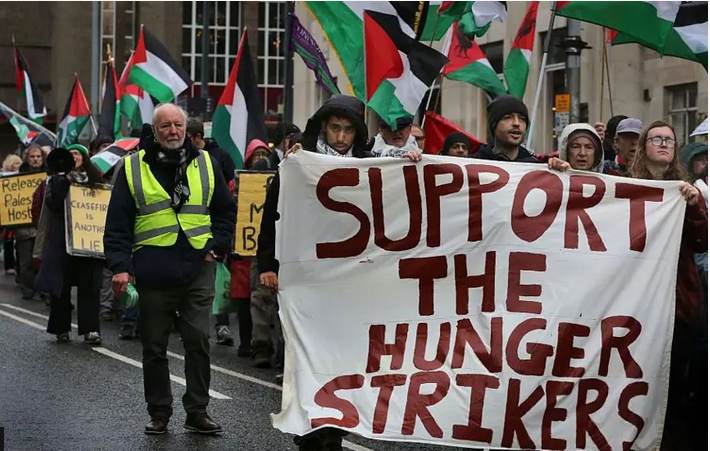
It's a scandal hiding in plain sight: a major hunger strike by pro-Palestinian rights prisoners in British jails, met with near-total silence from the BBC. Activists held on prolonged remand, some for well over a year without trial are starving themselves because every legal and political channel has been slammed shut. Their health is failing. Hospitalisations have occurred. Death is a real possibility and yet Britain’s public broadcaster largely looked the other way. This is not impartiality, it’s cowardice dressed up as editorial judgment. T he BBC is happy to report hunger strikes abroad, where repression can be safely framed as foreign barbarism but when the same tactic exposes the British state’s own abuse of remand, political policing, and the criminalisation of Palestine solidarity, the story suddenly becomes inconvenient. Silence, here, is not neutral. It is complicity. And if someone dies, that silence will stink forever.
TetleysTLDR: The article
Britain’s Hunger Strikers and the BBC’s Calculated Silence
There are moments when silence becomes a political act. Not an oversight. Not an editorial delay. A choice. And right now, the BBC’s response to one of the most serious hunger strikes in modern British prison history is exactly that: a decision to look the other way.
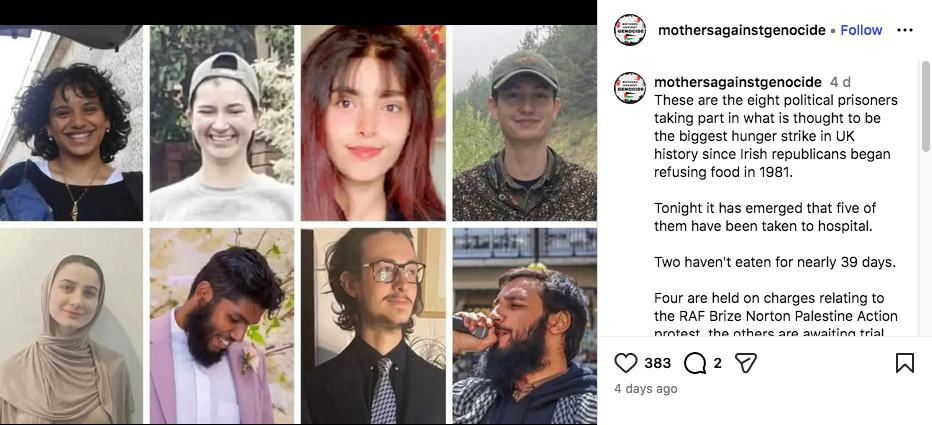
Across the UK prison estate, pro-Palestinian activists, many linked to Palestine Action, have been refusing food for weeks. Some for over a month. Some have been hospitalised. Medical warnings have been issued. Families and lawyers are openly discussing the risk of death. These are not convicted criminals serving sentences. They are people held on remand, legally innocent, some for well over a year.And yet Britain’s public broadcaster has largely behaved as if this is not happening.That absence is not neutral. It is the lubricant of power.
Hunger strikes are not performance. They are what happens when every other route has been sealed off. The hunger strikers are activists accused of direct action against arms companies and military-linked infrastructure, particularly sites connected to Israel’s weapons supply chain. The alleged offences range from trespass and criminal damage to conspiracy charges inflated by political context.
You do not have to approve of their tactics to recognise the pattern: repeated bail refusals, endless delays, prolonged remand, restricted communication. Lives suspended indefinitely while the state sharpens its case. Remand here is not administrative. It is coercive. It is the slow application of pressure designed to break people before trial. When courts refuse to move, ministers hide behind 'process' and the media falls silent, hunger strikes are not chosen lightly. T hey are chosen because they are the last remaining form of agency left to prisoners.
Britain maintains the fiction that remand is neutral. It isn’t. Extended pre-trial detention achieves all the effects of punishment without the inconvenience of conviction. It removes people from their communities. It damages health. It destroys employment. It isolates and crucially, it sends a warning to others. Political defendants are particularly vulnerable to this treatment. When the state wants deterrence rather than justice, remand becomes the weapon of choice. Hold someone for eighteen months without trial and you don’t need to win in court. You’ve already made your point.
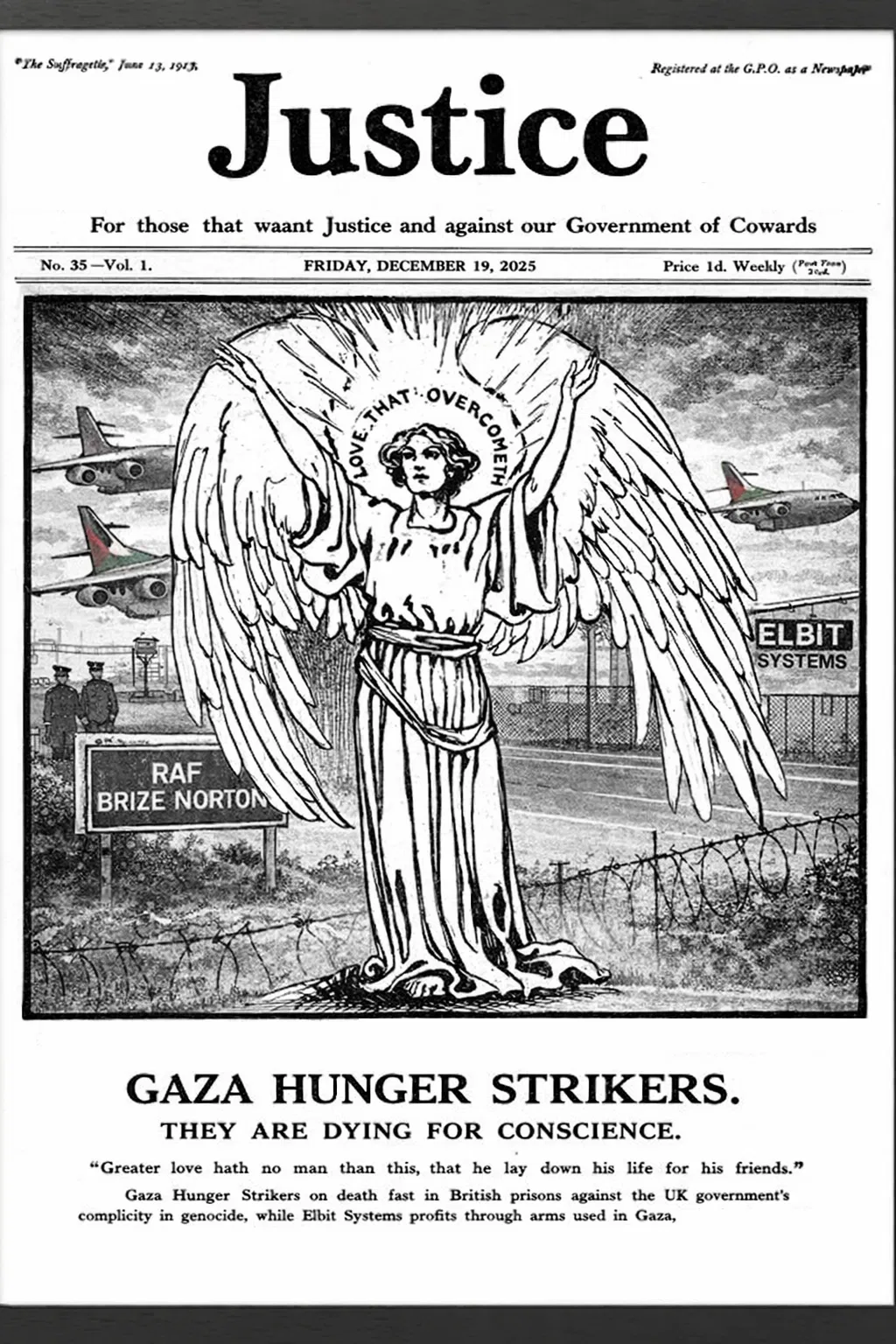
A word about the Suffragettes. A group that did far more than PA. They used bombs - they attacked Police and they used arson. Here is where the hypocrisy becomes obscene. Britain loves the Suffragettes: safely dead, safely mythologised, stripped of their militancy and repackaged as polite heroines of progress. But the reality is less comfortable. The Suffragettes smashed windows. They sabotaged property. They set fire to buildings. They were imprisoned, brutalised, force-fed, and mocked by the press as extremists and criminals.They also hunger-struck.Hunger strikes were central to suffragette resistance. Women like Marion Wallace Dunlop and countless others refused food in Holloway Prison, demanding recognition as political prisoners. The state responded with force-feeding, an act now rightly recognised as torture. Emily Wilding Davison did not die because she was unreasonable. She died because the state refused to hear women any other way. Her death was treated at the time much as today’s activists are treated now: as fanatics, nuisances, dangerous radicals. And yet today, MPs queue up to cosplay as Suffragettes. White dresses. Purple and green sashes. Performative reverence for women who were once branded terrorists of their day. The obscenity is this: on the very days female MPs wrapped themselves in suffragette symbolism, they voted to proscribe Palestine Action, a movement using direct action, including property damage, to oppose mass killing abroad. The same tactics. The same logic of resistance. The same state response. Different verdict, because one group is safely historical, and the other is inconveniently alive.

Sheer fucking hypocrisy: MPs cosplaying as Suffragettes the day they proscribed PA. They'd have proscribed the Suffragettes as terrorists except of course if it wasn't for the Suffragettes, they wouldn't have the vote.
The contrast becomes even more damning when set against that of Bobby Sands. When Sands began his hunger strike in 1981, the BBC covered it relentlessly. Daily updates. Medical condition reports. Political analysis. Interviews with family members. Parliamentary fallout. International reaction. The BBC did not pretend it was a marginal story. It did not bury it as a niche issue. It treated it, correctly, as a matter of national and international importance, because it exposed the moral and political crisis at the heart of British rule in Northern Ireland. Sands was not sanitised. He was not ignored. His hunger strike was understood as a confrontation between the body and the state. Today’s hunger strikers are doing the same thing, confronting the British state over political imprisonment, denial of recognition, and the criminalisation of dissent. The difference is not editorial principle. It is political convenience. Bobby Sands is now safe history. Palestine solidarity is present danger.
The Ministry of Justice insists welfare is being monitored. Healthcare is “available”. Procedures are being followed.This is bureaucratic language designed to neutralise urgency. It is the voice of an institution hoping the problem resolves itself quietly, preferably before it becomes a scandal.Because once bodies start failing, “process” stops sounding reassuring. It starts sounding like evasion.Families and lawyers have called for ministerial intervention. Meaningful engagement has not followed. Silence stretches. Hunger continues.
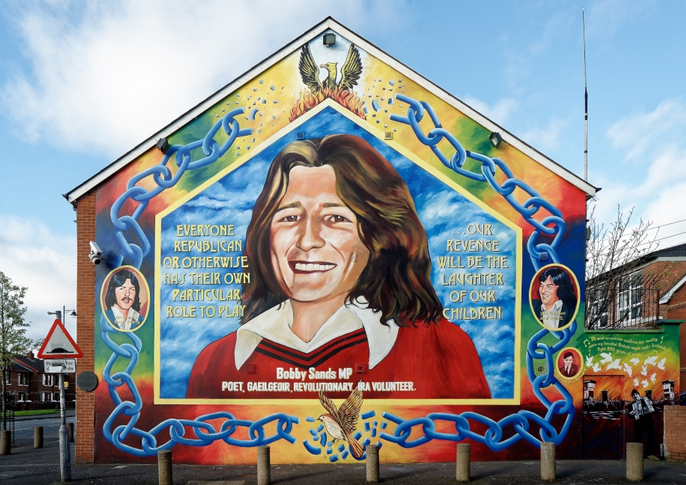
IRA hunger striker Bobby Sands: The BBC had wall to wall coverage of his hunger strike. Now there's radio silence on PA
The BBC’s Role: Impartiality as Moral Evasion
The BBC will insist it is impartial. But impartiality is not measured by what you avoid saying — it is measured by what you are willing to confront.The BBC has no difficulty covering hunger strikes abroad. There, they are framed correctly: as desperate acts exposing injustice and repression.But hunger strikes inside British prisons, carried out by people challenging British policy, British policing, and British complicity in atrocity, are treated as editorially awkward.So they are minimised. Delayed. Buried. Or ignored entirely.This is not bias in favour of one political party. It is bias in favour of power itself.
In the absence of mainstream coverage, social media has become the only place this hunger strike is even faintly visible and even there it is throttled, shadowed, and buried. Posts are quietly de-prioritised. Accounts are flagged. Videos disappear. What does break through circulates in fragments, passed hand to hand. This is what censorship looks like in the digital age: not bans and bonfires but algorithms that ensure urgency never quite reaches scale. The BBC’s silence is mirrored by platforms that claim neutrality while quietly ensuring that stories about British state abuse never trend, never settle, never force themselves into the national bloodstream. The result is a managed fog, where suffering exists but is never quite allowed to matter.
And then there are the empathy-free twats who pop up, smug as ever, to say: ‘Well, they don’t have to go on a hunger strike.’ As if that’s the point. As if anyone chooses starvation for fun. As if hunger strikes are casual lifestyle decisions rather than the last resort of people who have been ignored, delayed, buried, and boxed in. This is the moral vacancy at the heart of British political culture: a refusal to engage with why someone would rather damage their own body than trust the system any longer. Saying ‘they don’t have to’ is like saying the Suffragettes didn’t have to starve or Bobby Sands didn’t have to die. Technically true. Morally obscene. It is the language of people who have never had power used against them, and who mistake their own comfort for wisdom.
Silence does work. When the BBC does not report a hunger strike, public awareness collapses. Without awareness, pressure evaporates. Without pressure, nothing changes.This is how democracies rot quietly, not through dramatic crackdowns, but through the steady normalisation of suffering carried out off-camera.When protests erupt in response, the media will cover those. Paint. Arrests. Disruption. Condemnation is easy. Context is dangerous.The hunger striker’s failing body, however, is harder to spin. So it is kept out of sight.
This hunger strike exists because Palestine solidarity has been reclassified as a threat rather than a conscience.Protests are treated as public order problems. Activists are framed through extremism narratives. Legal tools built for terrorism are stretched to encompass civil disobedience. Arms companies are sacrosanct. Those who disrupt them are disposable.The hunger strikers are not anomalies. They are the logical endpoint of this approach.They are the point at which dissent is squeezed until nothing remains but the body itself.
There is the question hovering over everything. If one of the hunger strikers dies, there will be statements. Reviews. Carefully worded regrets designed to disperse blame but nobody will be able to say this wasn’t foreseeable. Bail could be reconsidered. Trials could be expedited. Ministers could intervene. Media could report. Silence is not inevitable. It is chosen.
Journalism is meant to illuminate abuses of power, not manage them. A functioning public broadcaster would treat a hunger strike in British prisons as a national emergency. It would explain remand. It would scrutinise political policing. It would interview families. It would ask ministers questions they don’t want to answer. The BBC has largely failed to do that: not because it can’t but because it lacks the nerve.
Untried prisoners are starving themselves in British jails to protest prolonged detention and political repression. Their health is deteriorating. Death is a real possibility. At the same time, MPs dress up as Suffragettes and congratulate themselves on progress, while criminalising the modern inheritors of militant dissent. And the BBC, confronted with this grotesque contradiction, has chosen quiet.
That is not a failure of knowledge. It is a failure of courage and if someone dies, that silence will not look neutral. It will look like what it is: complicity by omission.
Tetley is a left of centre writer and retired musician based in the UK. A former member of the Labour Party, he writes political analysis exposing Britain’s authoritarian drift, the criminalisation of protest, and the erosion of civil liberties.
A bit of shameless self-plugging here. This is www.TetleysTLDR.com blog. It's not monetised. Please feel free to go and look at the previous blogs on the website and if you like them, please feel free to share them.