
The Which Blair Project?

TetleysTLDR: The Summary
Team Blair seem to have their paws into everything unsavoury at the moment. Tony Blair’s old ID card obsession is back, rebranded as a digital ID 'modernisation' project. The Tony Blair Institute is lobbying hard for a national digital identity spine, pitched as efficient, secure, and inevitable, while his son Euan Blair’s ed-tech firm Multiverse builds HR and upskilling platforms that profile, score, and track workers at scale. Put together, you have a truly worst case scenario: a state-issued ID system seamlessly feeding corporate analytics pipelines. Supporters claim it’s safer and more convenient, but critics warn it’s a hacking honeypot, a soft-mandated 'Britcard' for work eligibility, and a gateway to mission creep: rent, healthcare, even voting. Irrespective of Multiverse's level of 'involvement', in the ID scheme, Multiverse’s dashboards, skills diagnostics, and algorithmic recruitment tools show exactly how such IDs could be exploited in the workplace. The danger isn’t conspiracy but architecture: once the spine exists, corporations and the state will use it to lock people into profiles they cannot contest.
TetleysTLDR: The article
Twenty-five years ago, Tony Blair tried to force through the Identity Cards Act: a centralised ID scheme with a National Identity Register hoovering up citizens’ details. Parliament passed it in 2006; the coalition government repealed it in 2010 and destroyed the database in 2011 after a public backlash that saw the scheme branded intrusive, costly, and authoritarian. Wikipedia
A generation later, the same political lineage is back under new packaging. Tony Blair now fronts a well-funded campaign for digital ID, insisting that the old fears are outdated and the technology is safer, cheaper, and more convenient. His think-tank, the Tony Blair Institute (TBI), has spent the past few years pushing a new consensus for state digital identity, touting polling that claims majority support. The pitch is familiar: cut fraud, curb illegal work, speed up government services, modernise Britain. Tony Blair Institute
In parallel, Euan Blair, Tony Blair’s son, runs Multiverse, a venture-backed upskilling company that is already handling Government contracts. Multiverse have not been given the contract to design the Digital ID platform and the level of involvement of Multiverse in the TBI pushed scheme is open to interpretation, but it seem inconceivable that there has been no discussions between the two groups, given that Multiverse already operate in the public sector in exactly the kind of modular interface the digital ID requires. It's a dystopian nightmare that promises employers measurable productivity gains by diagnosing skills gaps, training workers in data/AI, and tracking learning outcomes on its platform, and god forbid if you fall between the algorithms. Multiverse gives dashboards, diagnostics, and data: it boasts business impact you can measure and a skills gap diagnostic that assesses employee capabilities and progress. It is, explicitly, a system for profiling and quantifying workers at scale, exactly what digital ID would need. Multiverse
Put those two tracks together, the father’s public push for a national digital identity spine and the son’s private platform for datafying the workforce and you have a dystopian roadmap for the future: the re-emergence of an ID state, only now plugged into corporate talent pipelines, algorithmic scoring, and skills passports.
The fact is that whoever is involved in this this, it is a really bad idea, but Blair involvement takes the piss to a new level.

It’s different now: yes! and that’s the problem
Defenders of digital ID say the 2000s debate is ancient history. Today we already live with 'soft IDs': phone numbers, device fingerprints, bank logins, travel cards, NHS apps, school records, and CCTV all stitched together by advertisers and analytics firms. A digital ID, they argue, simply rationalises the chaos and makes everything more secure. The TBI’s latest paper frames digital ID as a pragmatic upgrade to reduce fraud, speed up services, and tackle illegal work, while public-opinion data is presented as proof that the country is ready. Tony Blair Institute
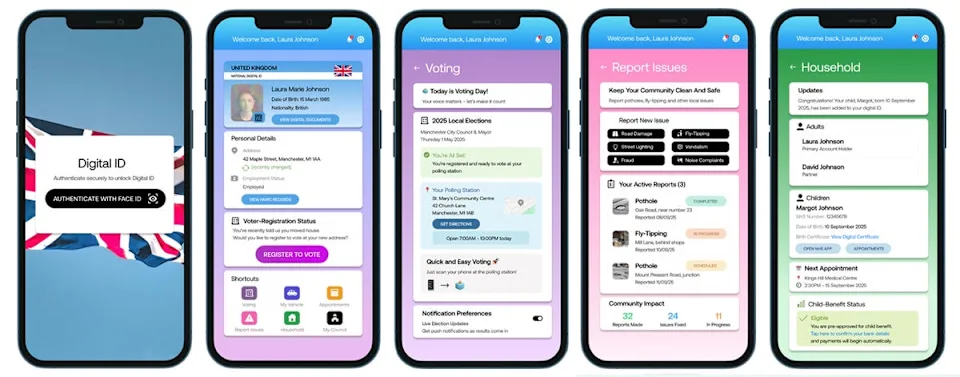
That’s exactly why a state-backed digital ID is more dangerous now. In 2006, the ID card was a single database risk. In 2025, a government ID becomes the integration point: the spine that can link together multiple public and private datasets, with powerful incentives to make participation de facto mandatory. When you unify identity, you lower the transaction costs of cross-referencing everything else. That is not paranoia; it’s the centre of the current UK debate. The government is advancing a UK digital identity and attributes trust framework to standardise how organisations exchange verified identity attributes. It envisions schemes in which many organisations agree to common rules for sharing and certifying digital IDs and attributes, precisely the kind of plumbing that lets state and corporate systems interoperate. GOV.UK
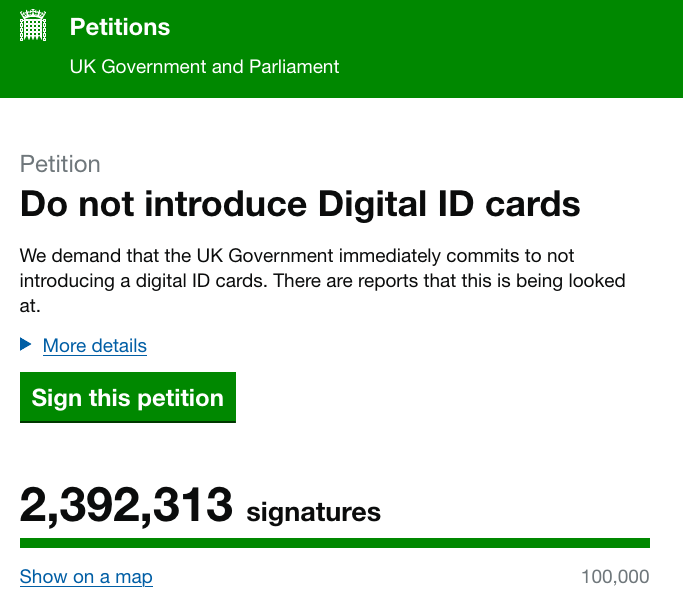
And while ministers talk up convenience, security experts and civil liberties groups are warning, again, about centralised risk and mission creep. Over the last 48 hours alone, reporting has highlighted plans for a UK digital ID (Britcard) carried on phones, mandatory for work eligibility checks, and possibly extended across services, with critics calling it an enormous hacking target and a road to a papers-please society. Even supportive ministers have admitted there are hacking risks.
Where Multiverse fits, and why it matters
If you want a concrete picture of how a digital ID would intersect with the workplace, look at what Multiverse sells to employers right now.
- Skills diagnostics and ROI tracking. Multiverse’s marketing emphasises 'business impact you can measure', with a platform that uncovers skills gaps, upskills teams, and tracks 'quantifiable return on learning investment'. That necessarily entails collecting granular performance and progression data on workers before, during, and after training. Multiverse
- Line-manager dashboards. In July 2025 Multiverse launched a Line Manager Dashboard to centralise progress and support insights for apprentices: giving managers 'clear visibility' throughout a learner’s journey. Centralised visibility for performance and support data is marketed as a virtue; translated into blunt terms, it’s a persistent surveillance-and-scoring layer in the workplace. Multiverse
- Community data + algorithmic services. Multiverse’s Community Hub Privacy Policy spells out the breadth of personal data it gathers: identity, location, education, skills, work experience, social links, even payment info and engagement metrics. The policy goes further: it expressly states that this data is analysed to 'improve… the quality of the Company’s algorithmic recruitment services' and to optimise engagement across its user-facing products: explicit acknowledgement of profiling to shape hiring pipelines. Cookies and third-party trackers are listed (e.g., Google Analytics; Stripe). Multiverse Community Hub
- Ambition to scale AI apprenticeships. In June 2025, Multiverse committed to 15,000 AI apprenticeships aligned to the UK government’s AI mission. Whatever your view of that target, the logic is expansion: more learners, more employers, more data under management. Multiverse
- Government-adjacent work. Trade directories and company materials describe partnerships with hundreds (often '1,000+') of employers, including major public-sector-adjacent organisations. The firm pitches itself as a route for local authorities to deliver digital transformation using apprenticeship levy funds. That is, again, direct interface between state budgets, public bodies, and Multiverse’s data layer. THINK Digital Partners

None of this is illegal or even unusual in modern ed-tech. And that is kind of the point. The normalisation of always-on metrics and algorithmic scoring creates the conditions where a national digital ID, sold as a neutral wallet or attribute store can be plugged into existing corporate assessment pipelines with minimal friction. A verified identity bound to verified credentials and training history is a dream for HR analytics and a nightmare for citizens’ ability to escape past labels and machine-generated inferences.
Due diligence questions that keep not being answered
When politicians and think-tanks tout digital ID, where is the due diligence on conflicts of interest and the political economy of data?
- Who benefits from a state-issued digital identity becoming the default way to verify work eligibility and skills? The obvious winners are firms already positioned as data brokers of human capital, platforms that score, segment, and deliver talent. Multiverse’s own copy talks about measurable business impact and skills diagnostics; its community privacy policy explicitly connects user data to 'algorithmic recruitment services'. If you design the national ID spine first, you make it effortless to graft these capabilities onto employment checks and progression gateways. Multiverse
- What safeguards will stop mission creep? Civil liberties groups argue that once a digital ID exists, every convenience becomes a soft mandate: prove your ID to work, then to rent, then to vote, then to access healthcare. Recent coverage of the UK plan underscores exactly this ratchet, with employment checks floated as the initial compulsory use-case. That’s textbook soft coercion.
- What is the system’s breach surface? Centralised identity systems are attractive attack targets; respected security voices have warned that the proposed UK scheme could become exactly that. Even ministers have been reduced to saying the public should embrace the risk. That isn’t a risk assessment, it’s an admission that the risk is significant and unsolved. The Guardian
- Where’s the transparency on funding and lobbying? The Institute for Government notes Blair’s renewed push for digital ID since 2023, sometimes in lockstep with senior Conservatives, and the TBI has kept up a drumbeat of advocacy, complete with friendly polling and glossy primers. At the same time Mulitverse is positioning itself to deliver this. The Guardian further reports on who’s likely to bid for contracts (Deloitte, BAE, even interest from Amazon/Palantir) raising classic concerns about vendor lock-in. Institute for Government
Follow the money is not a conspiracy theory
Even if Digital ID was introduced. Multiverse should be nowhere near it. Multiverse’s growth story has been rocky but well capitalised: a unicorn valuation of $220m in 2022; rapid US expansion; layoffs and retrenchment as revenues lagged; losses climbing to ~£60m in the year to March 2024 even as turnover rose. Through it all, Euan Blair’s personal wealth suggests the equity story remains intact. None of this is criminal; it’s the venture treadmill. But it tells you the business incentives: growth demands more data, more users, more integrations and a national digital ID regime lowers customer acquisition and verification frictions across the board. Tracxn
The firm also acquired an AI company (Searchlight) to bolster its analytics engine and margins, exactly the move you’d expect from a platform leaning deeper into algorithmic talent scoring and prediction. Again: not an accusation but a clear datapoint about direction of travel. The Times
The politics you can see from space
Tony Blair’s renewed advocacy for digital IDs isn’t coy. He’s on the record urging their introduction as part of a wider tech-led reform programme, and in 2025 his institute released yet another paper arguing the UK is ready. The mainstream press is covering the impending UK plans, complete with timelines, wallet apps, Britcard branding, and the assertion (from ministers) that breaches are a risk we must stomach. That the former PM who tried physical IDs is now the think-tanker for digital IDs is not incidental. It’s the through-line. The Times
Here’s the uncomfortable symmetry:
- Blair Senior: spent years centralising and modernising the state, culminating in the 2006 ID scheme; now champions a 'digital ID for a state that works' with polling and policy muscle behind it. Wikipedia
- Blair Junior: built a platform business that converts education and work histories into machine-readable profiles, complete with dashboards for line managers and algorithmic services for recruitment. Multiverse
- The policy environment: government standards for verified attributes; mobile wallet infrastructure; a political drumbeat to make digital ID a condition of work checks first, then who knows what next. GOV.UK
Call it modernisation if you like but from the vantage of civil liberties, it is a hereditary revolving door between state power and corporate data extraction. The state issues and gradually mandates and corporate partners monetise the flows. The human being sits in the middle, simplified into attributes, scores, and risk flags.
https://www.yahoo.com/news/articles/britcard-digital-id-161957320.html
Concrete examples of Multiverse over-reach
- Algorithmic recruitment justified by community surveillance. Multiverse’s Community Hub policy explicitly states that it analyses user engagement data (before, during, and after programmes) 'with an ultimate purpose of improving… the Company’s algorithmic recruitment services'. This isn’t just training; it’s building a persistent behavioural profile designed to feed automated hiring decisions. Drop a government-verified ID into that ecosystem and you’ve closed the loop between state verification and corporate selection algorithms. Multiverse Community Hub
- Always-on managerial visibility. The 2025 Line Manager Dashboard sells clear visibility into apprentice progress and support insights. Employers love it; workers have little say over how far this visibility extends or how long the data persists. In an economy where your verified ID is also your verified learning history, a poor machine-generated propensity to complete score could shadow you from one placement to the next. Multiverse
- Scaling to tens of thousands under an AI banner. The public pledge to create 15,000 AI apprenticeships over two years to support the UK government’s AI mission, is a statement of intent to dramatically expand data capture on trainees and employees across sectors. Whatever you think of the policy goal, the operational reality is mass data collection plus integrations with employer systems, exactly the terrain where a national digital ID simplifies onboarding, tracking, and cross-platform sharing. Multiverse
- Cookies and cross-site tracking baked in. Multiverse’s own cookie statements acknowledge tracking technologies that can follow users across sites. In isolation, that’s bog-standard web practice; in combination with identifiable training and employment records tied to a government ID, it’s a recipe for identity resolution far beyond any one platform. Multiverse
- Financial pressure to intensify datafication. Public accounts reporting widening losses alongside growth, plus US layoffs and a retreat from registered apprenticeships, signal a firm under pressure to find higher-margin, more automated offerings. Acquiring an AI startup to boost margins fits that pattern: more prediction, more scoring, more productised analytics on human data. A national digital ID regime would lower customer friction for selling these capabilities into new checks (right to work, right to rent, etc.). The Sunday Times
Security isn’t a magic word
Proponents insist that digital ID will reduce risk by replacing a messy patchwork of identifiers. The problem is not cryptography; it’s governance. The UK’s trust framework contemplates multi-organisation schemes that share and certify attributes. That’s fine on paper. In practice, breach and misuse risk scales with the number of integrations and the incentives to expand use-cases. Even The Guardian’s neutral coverage stresses the 'enormous hacking target' problem; ministers waving that away with embrace the risk is not a safeguard. GOV.UK
Algorithmic decision-making layered on top of verified IDs raises separate risks. The recruitment industry is already wrestling with bias, opacity, and data protection obligations when using AI for hiring and progression. Tie those systems to a state-verified identity and you amplify harms: the wrong label sticks harder, the model’s error is harder to challenge, and exit routes close. Mitratech
The Blair line is: the world has changed; digital ID is overdue. Our line should be: the world has changed, and that’s why digital ID is more dangerous now. In a country where employers, insurers, landlords, and government departments already run behavioural data through proprietary models, a state ID becomes the universal adapter. It doesn’t just help you log in; it helps others lock you in to profiles you can’t see and decisions you can’t contest. You don’t need a conspiracy to see the shape of the thing. You need only look at the father’s advocacy and the son’s product:
- Tony Blair and his institute lobbying hard for digital IDs, promising efficiency gains and citing supportive polling, even as experts warn about centralisation and creep. Tony Blair Institute
- Euan Blair’s Multiverse building and scaling a platform that scores, tracks, and dashboards human potential and that explicitly leverages user data to enhance algorithmic recruitment services. Multiverse
This is not an argument about personalities; it’s a warning about architecture. The personalities involved are just a big red flag we should all be taking notice of. If you build a national identity spine in 2025, it will be spliced into corporate analytics stacks by 2026. If you mandate it for work eligibility in 2027, it will be required for a dozen other gateways by 2029. And if you let that happen without ironclad limits and transparent governance, you will have created the most powerful instrument of social sorting this country has ever seen. If ministers want trust, start with hard guarantees: no centralised registers; no function creep beyond specified use-cases; strict purpose limitation; adversarial security testing; independent audits; statutory rights to human review; and a bright-line firewall between state IDs and private scoring models.
Where is gets really sinister is when you add money into the mix. Project Rosalind, the Bank of England’s trial for programmable payments. [disucussed by this Blog on 19th May] Here is where is gets really dark as this lays the framework for fusing identity and currency. Link ID to eligibility and payments, and the state no longer just checks who you are, it controls what you can do. Access to wages or benefits could be switched off with the flick of a policy toggle; 'smart' money could be restricted to approved purchases; private scoring models could mine ID-linked histories until surveillance capitalism and state surveillance blur into one. By tying this ID spine to Rosalind, and by market inevitability you are staring at the skeleton of a managed personal credit system, not a conspiracy, but a project that is currently being quietly prototyped by the Bank of England and its corporate partners. Without strict guarantees, no central registers, no function creep, statutory human review, and a hard firewall between state IDs and private scoring: For years credit referencing had acted as boot on the throat holding back the less well off from pulling themselves out of poverty. That wasn't it's intention, it was just designed in a way that this became an unintended consequence. With Project Rosalind sitting over the ID frameworks, this time it is deliberately being embedded. We need to talk about Project Rosalind
This Britain risks sleepwalking into Kafka with a Mastercard logo.Until then, the only sensible position is the one the public arrived at last time: no, thanks. Big Brother Watch
And the Blairs have their paws all over it.
A bit of shameless self-plugging here. This is www.TetleysTLDR.com blog. It's not monetised. Please feel free to go and look at the previous blogs on the website and if you like them, please feel free to share them.Better still have a look at the back catalogue and catch up on previous blogs at https://www.tetleystldr.com/tetleystldr-blog/tetleystldr-back-catalogue